

Teams from across OCDE gathered Tuesday at the Conference Center to share progress, align efforts and reflect on how their work is advancing the organization’s 5-3-1 Strategic Plan.
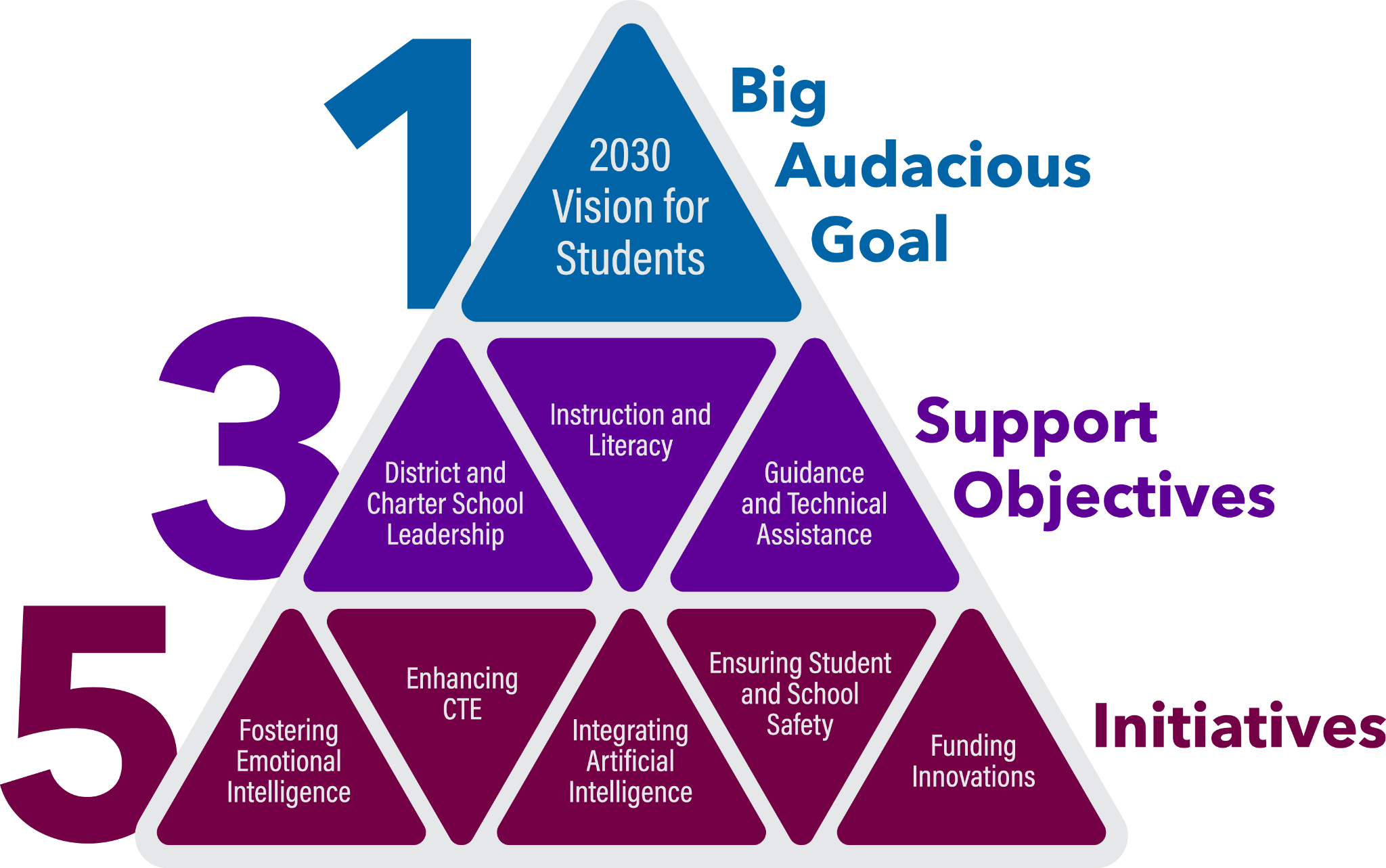
From 8:30 a.m. to 1:30 p.m., staff representing programs and divisions across the organization took turns stepping onto the stage to discuss how their work supports OCDE’s 5-3-1 framework — five strategic priorities, three support areas and one overarching goal: the 2030 Vision for students in ACCESS and Connections.
Hosted and moderated by County Superintendent Dr. Stefan Bean, the symposium featured a series of presentations in which teams outlined their strategic priorities, key objectives and the performance indicators they are using to measure progress.
Each presentation followed a consistent format. After brief remarks at the podium, presenters took their seats on stage to form a panel. Dr. Bean and members of the Cabinet asked questions about implementation and outcomes, before opening the discussion to the audience, which included fellow presenters and staff from across OCDE.
A recurring theme throughout the day was collaboration. Presenters frequently noted that the five strategic priorities, three support areas and one big goal are deeply interconnected, and that the strongest progress happens when teams work across divisions and programs. Several discussions highlighted how sharing data, aligning efforts and building partnerships within OCDE can strengthen outcomes and accelerate improvement.
First introduced in late 2024, OCDE’s 5-3-1 Strategic Plan is built on a foundation of five strategic priorities: fostering emotional intelligence, enhancing career technical education, integrating artificial intelligence, ensuring student and school safety, and funding innovations. Next are three key support areas: instruction and literacy, guidance and technical assistance, and district and charter school leadership.
At the top of the pyramid is the one “audacious goal” — a 2030 Vision for Students served directly by OCDE through its alternative and special education programs.
Throughout the symposium, teams highlighted how the 5-3-1 framework continues to guide work across OCDE — from strengthening instruction and student supports to building systems that advance equity, access and long-term student success in Orange County. The mood remained upbeat and forward-looking, with presenters and leaders alike emphasizing shared ownership of the organization’s strategic direction.
Dr. Bean closed the session by emphasizing the importance of collaboration and shared purpose.
“You don’t do this work in isolation,” he said. “Every single one of you supports one another so that we can do this work on behalf of our 450,000 students.”
He added that the 5-3-1 framework is more than a strategy. It’s a shared roadmap that helps teams stay connected and aligned in their work.
“Know that your work matters, and doing it together even matters more,” he said.